In the pursuit of a truly intelligent home, the market is saturated with high-priced gadgets promising a futuristic lifestyle. Yet, the foundation of effective automation isn't a talking refrigerator; it's a network of discrete, reliable sensors that provide the data your system needs to make smart decisions. We're cutting through the noise to analyze a selection of hyper-affordable Zigbee sensors from AliExpress, evaluating their true return on investment and determining if their low cost compromises performance. This is about building a smarter home, not just a more expensive one.
Analyst's Top Pick
For sheer, undeniable value and system-wide utility, the Global version Aqara Temperature Humidity Sensor is the single best investment. At a price point that defies its performance, it provides the core environmental data needed to unlock significant energy savings and comfort-based automations, offering the highest ROI of any device we reviewed.
How We Evaluated
As a market analyst, my evaluation transcends simple features. Each sensor was assessed based on a strict price-to-performance ratio, long-term value proposition, and its potential for tangible return on investment (ROI) through energy savings, convenience, or security enhancement. We factored in ecosystem compatibility (specifically with Zigbee 3.0, HomeKit, and open-source platforms like Zigbee2MQTT), and analyzed aggregate user data to gauge real-world reliability and battery longevity.
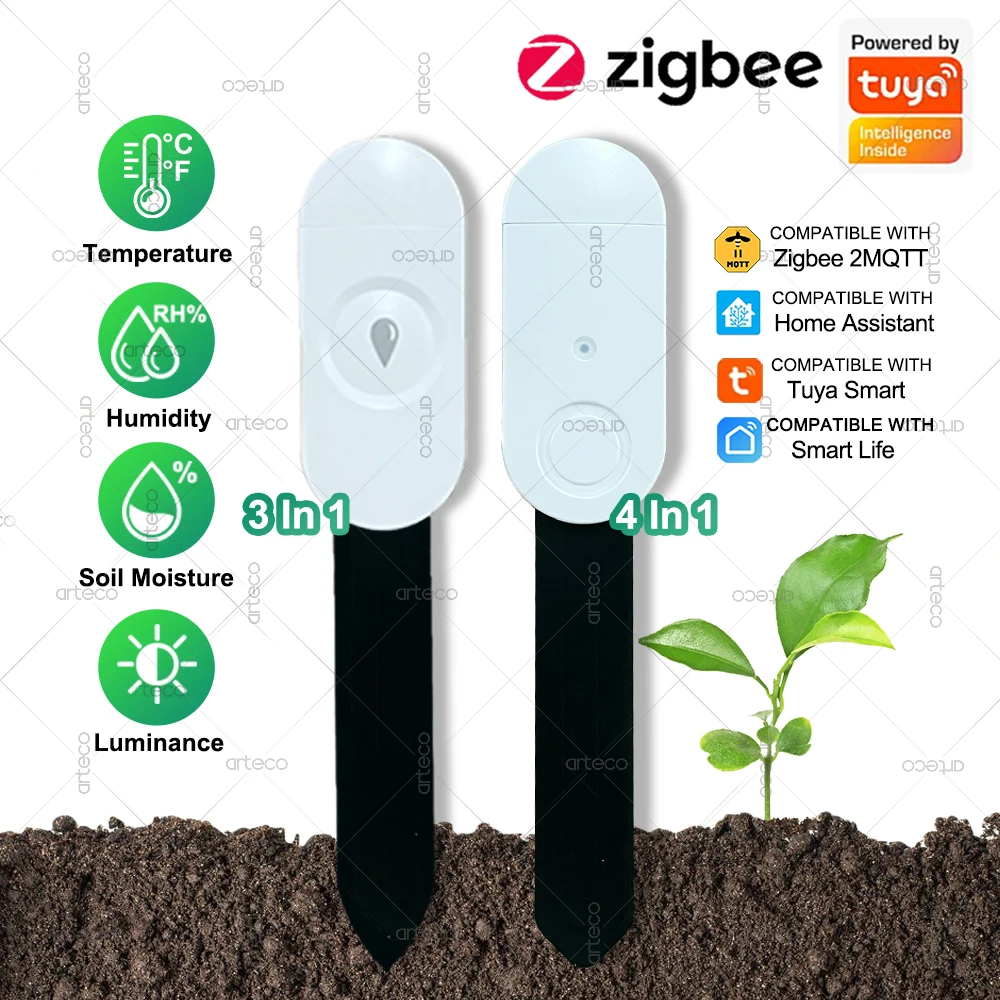
Zigbee Soil Moisture Sensor Temperature Humidity Luminance Detection Smart So…
Who This Is For
This analysis is for the cost-conscious DIY smart home builder who has moved beyond basic smart plugs and is ready to create a more responsive, automated environment. It's for individuals who understand the necessity of a Zigbee hub and are looking to expand their sensor network with reliable, low-cost devices that provide a high return. If you're more interested in functional automation than flashy brand names, this is your definitive guide.
| Product | Price | Rating | Best For | Score |
|---|---|---|---|---|
| Global version Aqara Temperature Humidity Sensor | $1.91 (prices may vary) | ⭐ 4.8/5 | High-ROI Climate Automation | 9.8/10 |
| Original Aqara Door Window Sensor (Low Price) | $3.78 (prices may vary) | ⭐ 4.8/5 | Ultra-Affordable Event Triggers | 9.5/10 |
| Aqara Wireless Mini Switch | $8.65 (prices may vary) | ⭐ 4.7/5 | Versatile Physical Scene Control | 9.0/10 |
| Zigbee Soil Moisture Sensor | $7.73 (prices may vary) | ⭐ 4.4/5 | Niche Automated Plant Care | 8.5/10 |
| Original Aqara Door Window Sensor (Standard Price) | $15.22 (prices may vary) | ⭐ 4.9/5 | Reliable HomeKit Security | 7.5/10 |
Dissecting the Zigbee Sensor Ecosystem: An ROI Analysis
The true value of a smart home is realized when its components work in concert, reacting to the environment and your presence. The devices under review today are the nerve endings of such a system. They are not the main event; they are the critical enablers. Our deep dive focuses on the Aqara ecosystem's dominance in the budget space and how a Tuya-based competitor carves out its own valuable niche.
The Aqara Value Proposition: Dominating the Price-to-Performance Curve
Aqara, a brand closely associated with the Xiaomi ecosystem, has systematically cornered the market for affordable, reliable, and aesthetically pleasing smart home sensors. Their adherence to the Zigbee protocol, coupled with official Apple HomeKit support (when used with an Aqara hub), makes them a compelling choice for both beginners and advanced users. The ROI with Aqara products is often immediate and substantial.
The Cornerstone Device: Aqara Temperature & Humidity Sensor
At an astonishingly low price of $1.91 (prices may vary), this sensor is not just a product; it's a strategic entry point into meaningful automation. The cost is so negligible that deploying multiple units throughout a home is fiscally trivial. The ROI, however, is massive.
- Energy Savings: The most direct financial return. Link this sensor to a smart thermostat or smart plug-controlled AC unit. Create an automation: "If the living room temperature rises above 75°F, turn on the AC." Or, "If the bedroom temperature drops below 68°F, turn off the window fan." This prevents your HVAC system from running unnecessarily, directly impacting your utility bills.
- Asset Protection: The humidity sensor is invaluable. Place one in a basement to trigger a dehumidifier if humidity exceeds 60%, preventing mold growth. Put one in a humidor to monitor expensive cigars, or in a musical instrument case to protect a valuable guitar from warping. The cost of the sensor is a tiny fraction of the potential replacement cost of these items.
- Comfort & Health: Automate a bathroom fan to turn on when humidity spikes during a shower and turn off when it returns to normal. This improves air quality and prevents moisture damage. For parents, monitoring a nursery's temperature provides peace of mind and ensures a comfortable sleeping environment for an infant.
Worth it or Skip it? An absolute, unequivocal "Worth It." This is the single best dollar-for-dollar investment in the entire smart home landscape. Its performance is reliable, the battery lasts over a year, and the data it provides is fundamental to dozens of high-value automations. Buy a handful; you will find uses for them.
Contact Sensors: A Tale of Two Prices
Our product list presents an interesting market anomaly: two seemingly identical Aqara Door & Window Sensors at vastly different price points: $3.78 (prices may vary) and $15.22 (prices may vary). From a functional standpoint, these devices are the same. They are simple magnetic reed switches that report an 'open' or 'closed' state. The price discrepancy is likely due to factors like seller promotions, stock age, or regional versioning. The analytical conclusion is simple: the lower-priced model offers an exponentially better ROI, assuming it is a genuine product from a reputable seller (check store ratings).
The utility of a contact sensor is profound:
- Security: The most obvious use. Get an instant notification on your phone if a door or window is opened when you're away. This forms the basis of a DIY security system for a fraction of the cost of a subscription service.
- Automation Triggers: This is where the real "smart home" magic happens. "When the front door opens after 6 PM, turn on the entryway lights." "When the back patio door is opened, pause the thermostat to avoid cooling the outdoors." "If the office window is open and the forecast calls for rain, send me an alert."
- Reminder & Safety: "If the garage door is still open at 10 PM, send a notification." "If the medicine cabinet is opened, log the event."
Worth it or Skip it? The $3.78 version is a must-buy. Its value proposition is on par with the temperature sensor. The $15.22 version is also a solid product, but its ROI is diminished by the existence of the cheaper alternative. If only the higher-priced model is available, it's still a worthwhile purchase, but we recommend searching for the better deal first. The core technology is simple and reliable in both.
The Tactile Interface: Aqara Wireless Mini Switch
While voice and app control are hallmarks of the smart home, they aren't always the most efficient solution. The Aqara Wireless Mini Switch, priced at $8.65 (prices may vary), provides a crucial physical interface for your automations. Its ROI is measured in convenience and user-friendliness, especially for guests or family members who are less tech-savvy.
This is not just a simple on/off button. It supports three distinct actions: single press, double press, and long press. This allows you to control up to three different scenes or devices from one small, battery-powered switch you can place anywhere.
- Centralized Control: Place it on a nightstand. Single press: turn off all bedroom lights. Double press: turn off all the lights in the house ("Goodnight" scene). Long press: turn on a dim path to the bathroom.
- Guest-Friendly: A physical switch is intuitive. Place one by the couch to control the living room lamps without requiring guests to use an app or learn voice commands.
- Multi-Functionality: Use it as a smart doorbell button that sends a notification to your phone. Use it as a panic button for an elderly relative to press, triggering a call or a light flash in another room.
Worth it or Skip it? Worth it. While not as fundamentally essential as an environmental or contact sensor, the Mini Switch solves a real-world usability problem. For under $10, it adds a layer of simplicity and tactile control that makes a smart home more accessible and enjoyable to live in. Its versatility gives it a strong and lasting value proposition.
The Niche Specialist: Tuya Zigbee Soil Moisture Sensor
Moving away from the Aqara ecosystem, we have the Zigbee Soil Moisture Sensor for $7.73 (prices may vary). This device is a perfect example of a targeted solution for a specific problem. Its ROI is not measured in broad energy savings, but in the preservation of a specific, often costly, asset: houseplants.
For the casual plant owner, this might be overkill. But for someone with a collection of rare, expensive, or finicky plants, this sensor is a game-changer. It provides data on soil moisture, temperature, and ambient light, allowing for hyper-specific automated care.
- Prevent Plant Loss: The most direct ROI. Over-watering and under-watering are the top killers of houseplants. This sensor provides the precise data needed to avoid both. A single saved plant could easily pay for the sensor.
- Automated Watering: Pair this sensor with a Zigbee-controlled water valve or smart plug-connected pump. Create an automation: "When the fiddle-leaf fig's soil moisture drops below 30%, run the water pump for 15 seconds." This creates a self-sufficient plant care system, ideal for frequent travelers.
- Optimal Growth Conditions: Use the light and temperature data to ensure plants are in the best possible location in your home, maximizing their health and growth.
Worth it or Skip it? For serious plant enthusiasts, this is absolutely worth it. The cost is minimal compared to the value of their collection. For the average person, it's a skip. It's a specialist tool, but for its target audience, it offers an excellent return by automating a difficult and error-prone task.
The Unseen Prerequisite: The Zigbee Hub
It is critical to understand that none of these devices function independently. They all require a Zigbee hub or coordinator to communicate with your home network and smart home platform. This initial investment (typically ranging from $20 for a USB stick like a Sonoff ZBDongle-E to $50 for an Aqara M2 Hub) must be factored into the total cost. However, this is a one-time platform cost. Once the hub is in place, it unlocks the ability to add dozens of these ultra-low-cost sensors. The true economic power of Zigbee is not in a single sensor, but in the scalability of the network at an incredibly low per-device cost.

Aqara Wireless Mini Switch Zigbee Sensor Connection Smart Remote One Key Cont…
Frequently Asked Questions
Do I need a specific Aqara or Tuya hub for these sensors?
It depends on your desired setup. For the easiest, plug-and-play experience and guaranteed Apple HomeKit compatibility, Aqara sensors should be paired with an Aqara hub. However, Aqara sensors (and the Tuya sensor) can also be connected to universal Zigbee 3.0 coordinators, such as a Sonoff Zigbee Dongle or a ConBee II stick, which are then managed by open-source software like Zigbee2MQTT or ZHA within platforms like Home Assistant. This latter approach offers maximum flexibility and local control but requires more technical setup.
What is the real-world range of these Zigbee sensors?
The direct range from a sensor to the hub is typically around 10-20 meters (30-65 feet) indoors, highly dependent on wall materials and interference. However, Zigbee's key strength is its mesh networking capability. Any mains-powered Zigbee device, such as a smart plug, light switch, or certain light bulbs, can act as a repeater. This means they relay the signal from your distant, battery-powered sensors back to the hub, effectively extending the network's reach to cover a whole house.
Can I use the Aqara Door Sensor to trigger non-Aqara devices?
Absolutely. This is the core benefit of a centralized smart home platform. As long as your hub (e.g., an Aqara hub integrated with Google Home, or a Home Assistant setup) can communicate with both the Aqara sensor and the other device (e.g., a Wi-Fi smart bulb from another brand), you can create automations that bridge ecosystems. For example, you can easily create a rule that says "When the Aqara door sensor opens, turn on the Philips Hue light bulb." The hub acts as the central translator for all your different devices.
Featured Products on AliExpress
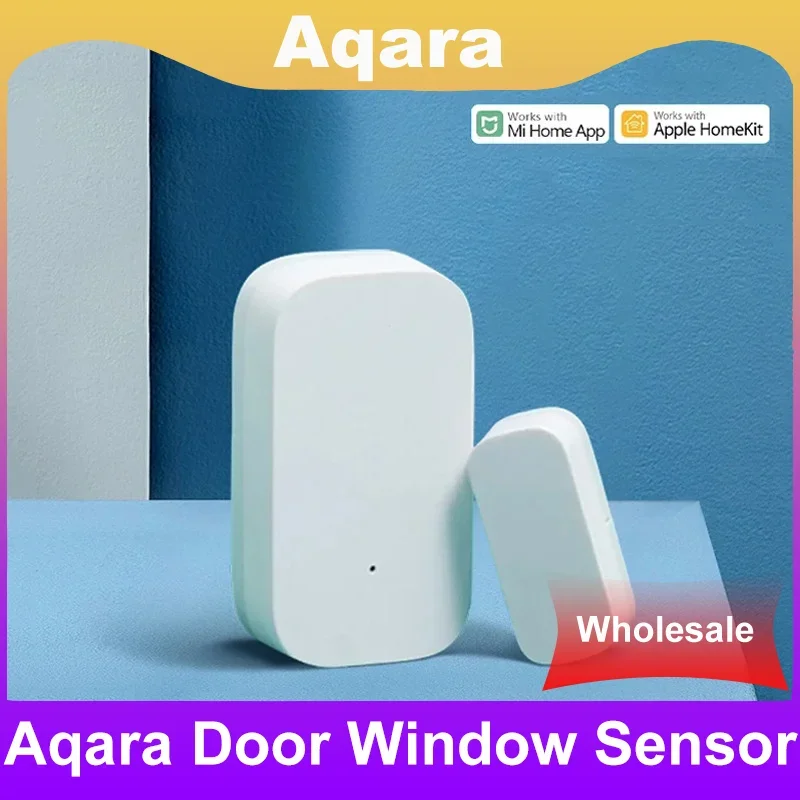
Original Aqara Door Window Sensor Zigbee Wireless Connection Smart Mini Door…
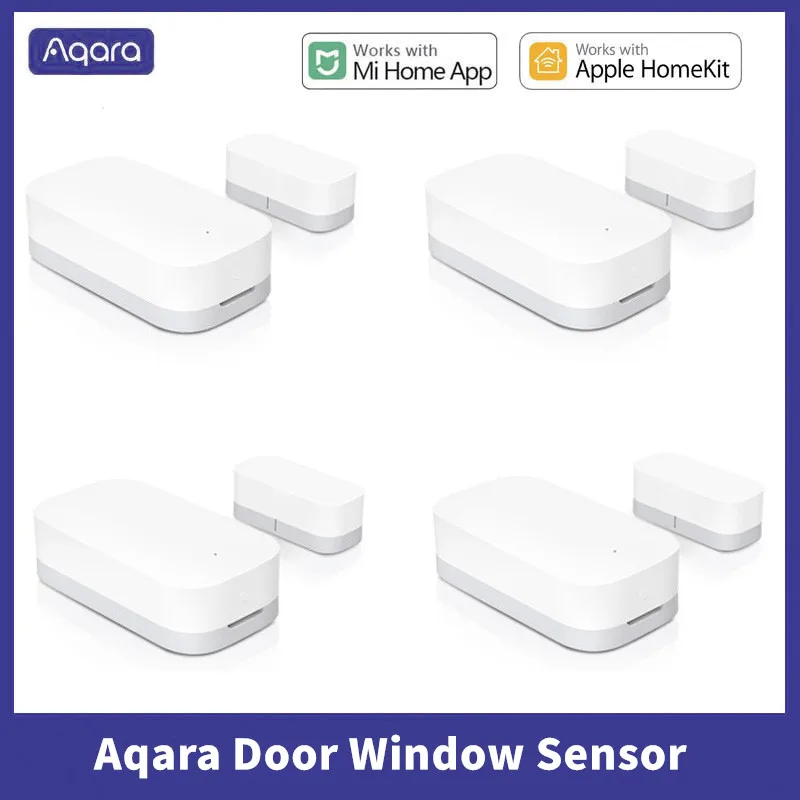
Original Aqara Door Window Sensor ZigBee Wireless Connection Smart Door Senso…

Global version Aqara Temperature Humidity Sensor Smart Air Pressure Sensor Zi…